
From Super Bowl Half Time Show to Guam: Why I feel the “U.S. Territory” structure is contributing to American Culture Disconnect
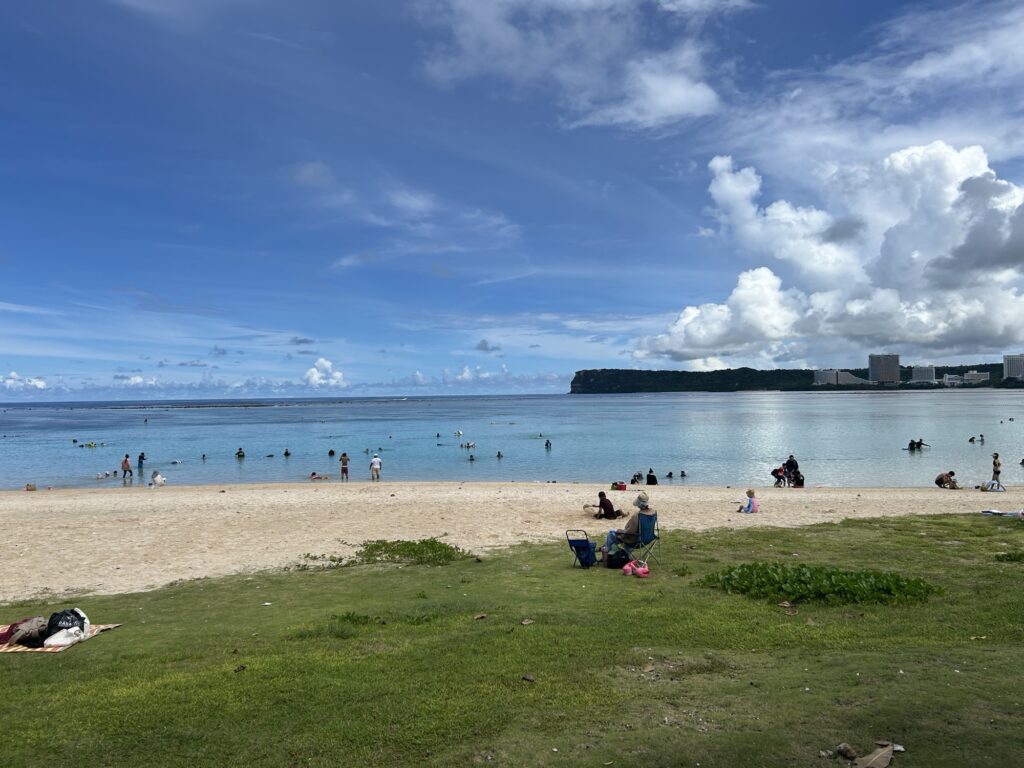
When I visited a family member in Guam after so long, I felt immense pride as a military family. Yet, as a guest, I sensed the island’s governance felt caught in between a 3rd world country and a 1st world county. Dogs were everywhere. Old Cars sat idol on streets decomposing after years of not moving, sometimes housing humans and/or dogs. There was poverty in a visual way that is handled differently in the United States. Guam is neither fully integrated, nor is it independent.
Recently, I chose to turn off my TV during the Super Bowl half time show controversy. I thought “I do not need any more reason to get riled up.” However, I’ve watched the responses to both shows. (Lyric, entertainment, and family friendly content aside) I believe part of why Puerto Rico’s status has sparked debate, and the world seems so divided, is because of its confusing relationship with the United States. In my opinion, this ambiguity isn’t healthy for the American culture. Territories are in limbo.
My adventures in Guam reinforced this thought. Guam is behind our culture in many ways. In music, in technology, in infrastructure ect. There is even multiple counts of unclean drinking water. Guam needs different things. Guam is a jungle with crabs that are able to squeeze me to death. It’s a different world than New Jersey, that is for certain. I do not know if the United States government is easily capable to protect Guams citizens in the way Guam needs and if they did, Would the citizens of Guam even want us? I don’t know if Americans are wanted there.
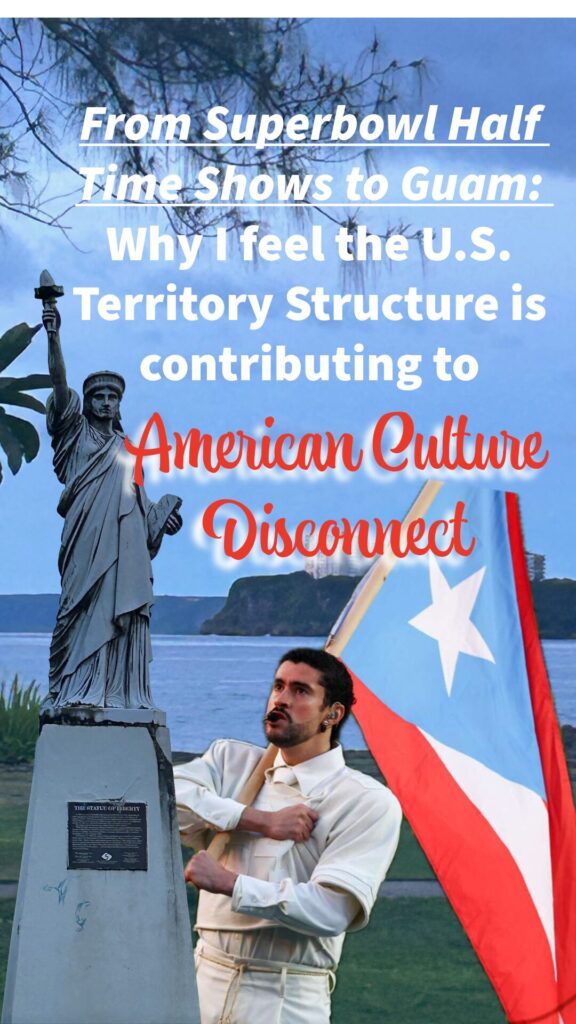
Here’s how a territory differs from a state:
States are fully protected by the U.S. Constitution; territories have partial application. States vote for president; territories do not. States elect full voting members of Congress; territories have limited representation. States pay federal income tax; many territories do not on locally sourced income.
The main U.S. territories are Puerto Rico, Guam, the U.S. Virgin Islands, American Samoa, and the Northern Mariana Islands.
This ambiguity isn’t just theoretical. Look at the tragic crimes committed on Epstein’s island, a territory. A lack of clear, strong federal accountability may have contributed to oversight gaps. I believe this partial United States status helped cover up crimes committed to children! If territories had defined status, whether statehood or otherwise, perhaps stronger systems could prevent abuses. In the end, clarity means justice for everyone, in every corner of what we call the United States.